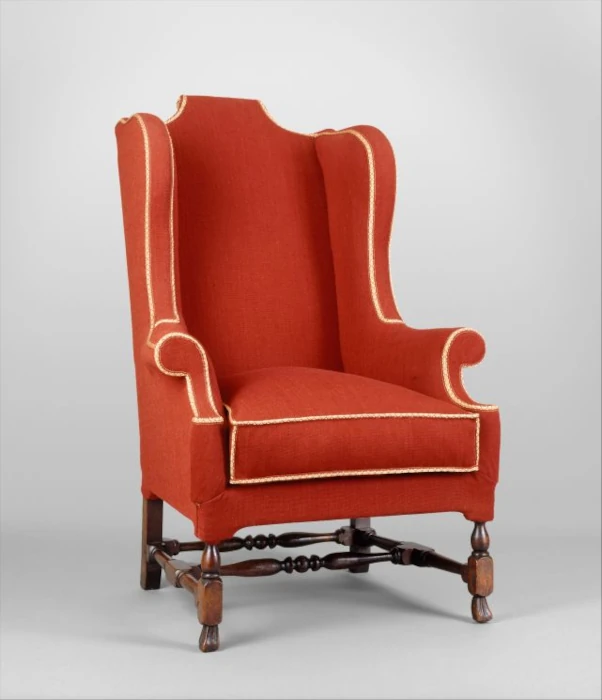
Standing in a modern furniture store, the traditional American wingback feels like a design shortcut to the future, with its architectural silhouette and tapered wood legs proving that its centuries-old frame was already built for the clean, minimalist aesthetics of today. This particular piece was produced in Boston, Massachusetts in around 1715-30. The wood used is soft maple, oak and black tupelo, to which black tupelo is just one of those woods cause it was around and looked nice for a while, but there is a reason why you don't hear modern furniture being made with it. Black tupelo is prone to warping and is definitely not rot resistant.
The upholstered wingback chairs, were originally known as fireside chairs, that they were produced in late 1600s England and France. The chair was originally meant to help the occupant stay warm as the wings would catch the heat from the fireplace, but also the high upholstered back would too. The predecessor chair design was high-backed settles, having the same design but no upholstery, just wood. The difference between the American upholstered wingback chairs and the British ones, is that American chairs focused on affordability and product volume, whereas British upholstered wingback chairs typically only upper society had one made with expensive wood, with complex aesthetic designs for status.
Picture from The Met